Beyoncé’s “Cowboy Carter” Signals Hope For A Country Renaissance
This year’s Super Bowl Sunday was punctuated by a seemingly innocuous advertisement for the cell phone carrier, Verizon. It featured actor Tony Hale, perhaps best known for his roles in “Veep” and “Arrested Development,” as an assistant to the legendary Beyoncé. The conceit is corporate and maybe a little obvious: Beyoncé seeks to “break the internet” with her star power, yet is unable to due to the strength of Verizon — or whatever. From presidential candidate to Twitch streamer, she makes increasingly outlandish internet-breaking attempts, all to no avail. It’s her last attempt that matters, though. It’s the simplest one: “Drop the new music,” she commands.
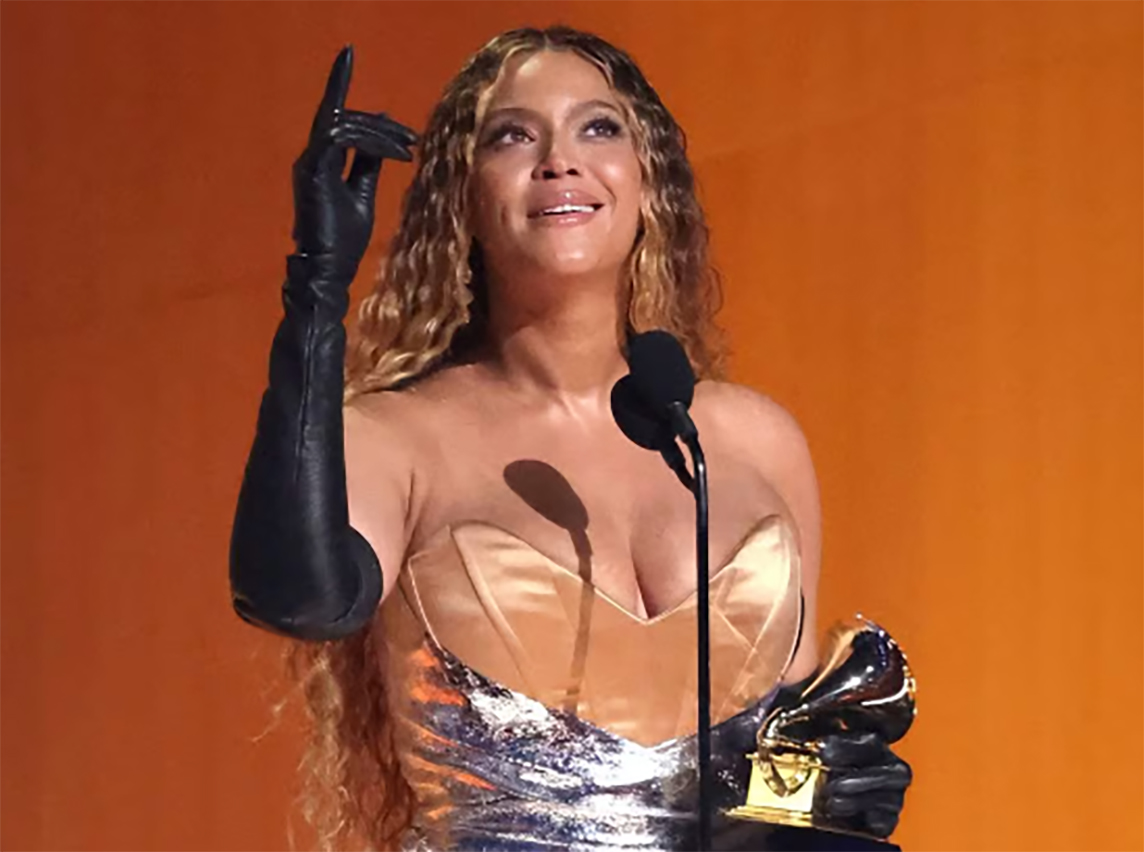
With that, Beyoncé’s newest sound was introduced to the world. The singles she released, “TEXAS HOLD ‘EM” and “16 CARRIAGES” carried the unmistakable twang of a music style Beyoncé is not often associated with. Country music, a genre long dominated by white male voices, is fairly distant from the performer’s typical sound (with one notable exception — “Daddy Lessons” hive, rise up), but one she wholly embraces in her most recent album. Act II of Beyoncé’s three-act project, “Cowboy Carter,” places the cultural icon squarely at the center of an ongoing emergence — an adoption that feels surprisingly fresh, yet somehow inevitable.
The country music renaissance seems to be, all at once, upon us.
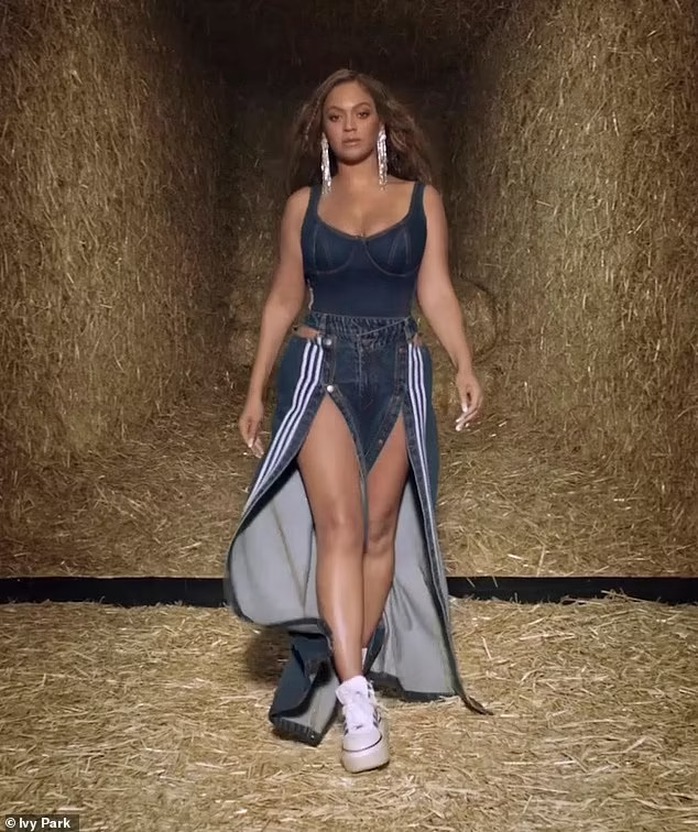
As “Cowboy Carter” sweeps the cultural imagination, a slew of mainstream pop artists appear simultaneously to be making the switch to cowboy boots and acoustic guitar. Olivia Rodrigo’s deluxe edition of her sophomore album “GUTS” includes acoustic tracks like “stranger” and “girl i’ve always been” that have an unmistakable country feel. Last month, Post Malone, who is featured on “Cowboy Carter,” performed an all-country set at Stagecoach, one of the definitive country festivals. Ed Sheeran declared last year that he plans to transition to the genre. And then there’s Lana Del Rey, who is set to release her newest album, “Lasso,” later this year — a country record.
Del Rey made note of the change at a recent event honoring the prolific producer Jack Antonoff. “If you can’t already tell by our award winners and our performers, the music business is going country. We’re going country. It’s happening,” she said.
Popular music appears to be boldly heading where, in years prior, it would not have dared to wander … why?
“Cowboy Carter,” with its country roots and unapologetic embrace of the long history of Black artists and influence in the genre, heralds the potential for a newer, more inclusive future for county music. And as other mainstream artists follow, aware of the commercial success to be gained in a genre that has seen major recent success, perhaps a new generation of listeners will discover country music in different terms.
In recent years country music has shifted its weight into the mainstream. Industry data firm Luminate named country as the fastest-growing streaming genre in the U.S. last year, with country on-demand audio streams passing 20 billion, an increase of 23.7% from the previous year. Country artist and controversial (alleged) chair-tosser Morgan Wallen’s album topped the Billboard 200 for 19 weeks last year. In August of last year, country songs claimed the top three spots on the Billboard 100 for the first time in history.
When I was young, country was a genre that felt almost universally reviled by those around me. It was music that seemed reserved for a select enclave of white communities. Often older, often conservative, often rural — or at least, suburban — and mostly working class. Shiny plastic stadium country ruled the genre. Trucks and beers and tractors and beautiful women seemed to be the primary lyrical fodder for each song produced by the giants of the genre. Those who did not fit the Kenny Chesney, Jason Aldean, Brad Paisley or Tim McGraw mold — which I will point out were (and still are) mostly millionaires cosplaying as working-class manual laborers driving “big green tractors” — were roundly excluded.
Non-white artists, non-male artists, and more generally progressive artists were often pushed to the side and silenced by country radio, a powerful hit-making force within the genre. Kacey Musgraves, who recently released her newest country album “Deeper Well,” has notoriously been made absent from country radio for her critique of 𝑠e𝑥ist practices in the industry. The Chicks (formerly the Dixie Chicks), a country group made up of all women, were widely rejected from the genre and especially country radio after they criticized George W. Bush’s 2003 invasion of Iraq.
For years — but especially in the patriotic aftermath of 9/11 — the country genre has served as a haven for misogyny and racism. In many ways, it still is. Country radio is still notorious for its seeming inability to air a song performed by a woman. Last year, Jason Aldean’s hit single “Try That In A Small Town” became a source of controversy for the musician when critics pointed out racist dog whistles in its lyrics and music video.
In general, non-white country artists are rarely pushed to the foreground as hit-makers. Even the exceptions are laced with caveats. There’s Darius Rucker, who was able to break into country only after receiving mainstream success as frontman for the rock band Hootie & the Blowfish. And the formidable Tracy Chapman, whose 1988 hit song “Fast Car” was covered by Luke Combs last year, a white country artist. His cover of the song went platinum and launched its re-emergence.
Still: here we are. Beyoncé, a superstar known the world over – a Black woman – released a record from the same genre that has historically rejected her and those like her. In fact, many speculate that the impetus of the album came when Beyoncé performed at the 2016 Country Music Awards alongside the Chicks, where she said she felt unwelcome.
While Beyoncé’s album is not a country album per se — she called it a “Beyoncé album,” not a country album in an Instagram statement — its country influences, cameos and homages show a real understanding of the genre’s history.
Like much of popular music, country’s roots lie in the field songs, slave spirituals, religious hymnals and professional songwriting of Black artists. The banjo, a staple of country music, descends from the West African lutes, brought to the States by enslaved peoples. Widescale appropriation of the instrument and genre as a whole led to the commercial decisions of a white music industry that pushed Black artists out and left only the trail they blazed — ready for white artists to tread.
As Beyoncé and other mainstream artists experiment with country sounds, a new audience is being exposed to the genre in different terms than in years past.
Inside the genre, artists like the folky Noah Kahan, Tyler Childers and Zach Bryan offer a fresher take on the music, one that harkens back to the storytelling balladry of country’s working-class history. Kacey Musgraves has attracted widespread acclaim for her newer works, which have major crossover appeal. Taylor Swift’s re-recording project has allowed a new (and significantly larger) generation of Swifties to discover her early country work. And Luke Comb’s “Fast Car” cover introduced a new audience to the work of Tracy Chapman.
So while this shift may not revolutionize the genre, it could push country music to a more inclusive and dynamic space. A space that embraces its history, appeals to a larger audience and will ultimately make a lot more money. It is worth remembering that it’s the consumer’s dollar that, by supporting this shift, can illustrate its value to the industry. We decide the fate of this country renaissance. So: put on those boots, don that cowboy hat and let’s get to streaming