Elvis Presley is a name synonymous with Rock and Roll, a cultural icon whose unmistakable voice and ahead-of-its-time performances sparked a musical revolution in the 1950s.
To his millions of fans, Elvis was the groundbreaking artist who brought a new sound to the mainstream, blending rhythm and blues with country to create a style that defied genres.
While some celebrate him as a revolutionary who bridged the gap between genres considered black or white in a torn America.
Some early background: Born in Tupelo, Mississippi, in 1935, Elvis grew up in poverty in a predominantly black neighborhood. From an early age, he was immersed in gospel, blues, and rhythm and blues – the music of black churches and juke joints that shaped his distinctive style.
When his family moved to Memphis, Tennessee, Elvis’s exposure to black musicians deepened. He would frequent Beale Street, the heart of the city’s music scene, where he forged friendships with Blues legends like BB King.
Many of the songs that helped launch Elvis’s career – ‘Hound Dog’, ‘It’s All Right’, and ‘Mystery Train’ – were originally recorded by black artists. His early recordings for Sun Records introduced a raw, energetic sound that fused country with rhythm and blues, a blend that would soon electrify American audiences. However, controversy followed from the start.
Elvis was often described as a white man who sounded black, and his provocative performance style – marked by his hips and gyrating dance moves – was unlike anything most white audiences had seen. His televised performances caused a national stir, earning him the nickname Elvis the Pelvis Pelvis and drawing criticism from conservative commentators. But while his stage presence shocked some, it won millions of young fans and cemented his status as a cultural icon.
However, Elvis’s success has always raised questions about cultural appropriation. Many songs that were hits for him previously failed to gain mainstream traction when performed by black artists. For example, Big Mama Thornton’s version of Hound Dog is a blues classic, but it was Presley’s cover that topped the charts. For some critics, this was emblematic of a music industry that systematically favored white performers while sidelining the black pioneers who created the genre.
Chuck D famously criticized Elvis in his 1989 song ‘Fight the Power’ Raps: “Elvis was a hero to most, but he never meant to be to me, straight-up racist, that’s it plain and simple.” While Chuck D later clarified that his criticism was directed more at the systemic racism of the music industry than Elvis personally, the comment underscores a long-standing debate about appropriation versus appreciation.

Elvis at the AT WDIA Goodwill Revue with Brook Benton, 1957 (Image: Getty)
Musicologist Neil Kulkarni echoes this sentiment, arguing that much of the history of pop music is a story of black innovation repackaged for a white audience. The music industry knew there were white teenagers listening to rhythm and blues, and they were looking for a white face to market it to. That’s how Elvis became the figure of rock ‘n’ roll, he says.
Not everyone sees Elvis as a symbol of exploitation, however. Historian Michael T. Bertrand, author of Race, Rock and Elvis, argues that Presley’s genuine love of black music helped break down racial barriers in a segregated society.
“Elvis represented a generation that grew up listening to black radio in the late 1940s,” Bertrand explains. He had an appreciation for African-American culture that was rare for white Southerners at the time. By performing black music, Elvis helped some white audiences rethink their attitudes about race.
Many black artists, including BB King, viewed Elvis as a friend and ally. King once said, “I don’t think Elvis ever thought of himself as the king of rock ‘n’ roll. He was humble and respectful. He knew where the music came from and gave credit where it was due.”
Elvis also showed support for black causes in quieter ways. In 1956, he attended a WDIA Goodwill revival in Memphis – a benefit concert organized by a black radio station to raise money for underprivileged children. Although his contract prevented him from performing, his presence at the event spoke volumes to those in attendance.
Despite his association with black music, Elvis rarely made public statements about civil rights. Some have argued that this was a missed opportunity for a figure of his stature. Others have suggested that his silence was the result of careful management by his notorious manager, Colonel Tom Parker, who was determined to avoid controversy that might hurt Elvis’s commercial success.
Whether Elvis was a cultural bridge or a symbol of appropriation remains a matter of opinion. What is undeniable is his lasting impact on music and popular culture. He helped introduce black-inspired music to a global audience, even as many of the original artists struggled to gain recognition.
News
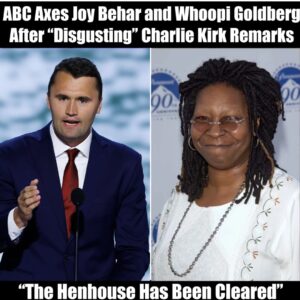
ABC Suspends Whoopi Goldberg Indefinitely After Disgusting Comments About Charlie Kirk, “We’ve Had Enough Of Whoopi”
It finally happened. After years of teetering on the edge of controversy, Whoopi Goldberg has been given the dreaded “indefinite suspension” stamp by ABC executives. The straw that broke the camel’s back? Not a poorly timed Holocaust analogy, not an…
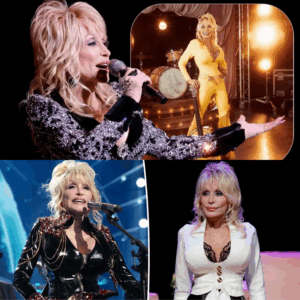
Dolly Parton postpones Vegas shows: Here’s what she told fans about her health
Dolly Parton announced Sunday that she is postponing her upcoming Las Vegas residency due to health concerns. The country icon shared the news in a statement on Instagram. Related Articles ‘Hello, I’m Dolly’: Dolly Parton’s life story will come to Broadway in…

Bad Bunny will be performing at the Super Bowl LX halftime show on February 8, 2026
Bad Bunny to Headline 2026 Super Bowl Halftime Show The halftime show, presented by Apple Music and executive produced by Roc Nation and Jesse Collins, will air live Feb. 8 from the Bay Area. Bad Bunny en el escenario durante la…
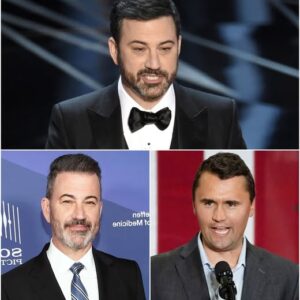
Jimmy Kimmel Launches GoFundMe After Losing Another $20 Million in Sponsorships Over Charlie Kirk Comments
If you thought Jimmy Kimmel’s suspension was rock bottom, think again. The late-night host has now reportedly launched a GoFundMe page after losing another $20 million in sponsorships over his controversial comments about the late Charlie Kirk. That’s right: the…

Guy Ritchie’s next Action Thriller film — IN THE GREY. Starring Henry Cavill, Jake Gyllenhaal, Eiza González and Rosamund Pike. Set to hit theaters in fall 2025, it’s shaping up to be the most anticipated horror film of the year.
In a thrilling departure from his signature action and gangster flicks, director Guy Ritchie is set to unleash In the Grey, a horror film poised to dominate the genre in fall 2025. Starring an all-star cast led by Henry Cavill, Jake…
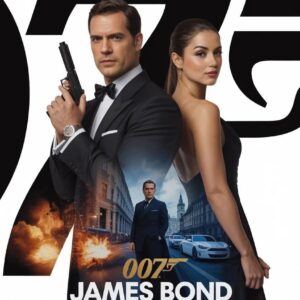
Superman ending, James Gunn sets up the new DCU and Peacemaker season 2
Henry Cavill steps into the iconic role of James Bond in 007 Bond 2025, bringing suave charisma, brutal power, and refined intensity. This explosive new chapter delivers world-class espionage, heart-pounding action, and a mission that could change everything. Superman, the…
End of content
No more pages to load