Elon Musk is pouring all of Tesla’s ambitions into robotics and automation systems, promising to usher in a new era for the company. Yet behind this enormous potential lie financial risks that could put Tesla in jeopardy.
Elon Musk, the founder of Tesla, has long been known for his bold and innovative technology projects, from electric cars and solar batteries to SpaceX’s reusable rockets. However, his latest strategy—betting the entire future of Tesla on humanoid robots and automation systems—is capturing the close attention of both the tech world and financial markets.
The Tesla Bot, also known as Optimus, is a humanoid robot project developed by Tesla, designed to perform dangerous or repetitive tasks in place of humans. Musk has announced that producing and deploying these robots will be Tesla’s long-term strategic focus, opening up a new market potentially worth hundreds of billions of dollars. Other automation systems, from smart factories to self-driving cars, are also considered key components of his plan.

Analysts see enormous profit potential in robotics. If Tesla succeeds, the company could lead an entirely new industry, transforming labor, operations, and even daily life. Humanoid robots could help address labor shortages, increase productivity, and open untapped markets in retail, services, and automated manufacturing.
However, behind this immense potential lie significant financial risks. Producing humanoid robots is extremely expensive, from research and software development to materials and mass production. The robotics market is still in its early stages, with unclear demand and uncertain profitability. Any mistakes or delays could cost Tesla billions of dollars, directly affecting its stock price and reputation.

Investors are beginning to take sides on this news. Some are optimistic, believing Musk has a proven ability to turn seemingly crazy ideas into reality, seeing this as a potential breakthrough for Tesla beyond the saturated electric vehicle market. Others warn that Musk may be overextending, investing in a high-risk sector while Tesla’s core market still faces volatility.
Financial expert John Roberts commented: “Elon Musk has never lacked ambition, but humanoid robots are a huge gamble. Success could make Tesla the leading company of the future. Failure could result in historic losses.”
For Musk, this is more than just a business project. It reflects his “future-focused” mindset: using advanced technology to change how the world operates. Yet his intense focus on robotics has prompted questions from the public and experts about Tesla’s long-term strategy, especially given that previous Musk projects, such as Hyperloop or Robotaxi, have yet to deliver expected profits.

The public is watching not just because of Musk’s larger-than-life persona but also because of how he turns high-risk challenges into compelling stories. With each Tesla step into robotics, people are alternately impressed and concerned, as the sector balances enormous profit potential with the risk of bankruptcy.
In this context, Tesla’s future seems to be walking a tightrope between innovation and risk. Elon Musk continues to prove he is unafraid to challenge himself and the company in volatile fields, but the world is waiting to see whether this robotics strategy will propel Tesla to new heights or push the company into unprecedented financial peril.
News
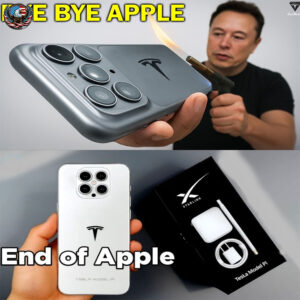
BREAKING! $789 Tesla Pi Phone Finally HERE! Starlink FREE & First Look DESTR0YS iPhone 17 Pro Max!
The wait is over. After years of rumors, leaks, and speculation, Tesla has officially unveiled the long-anticipated Tesla Pi Phone, priced at just $789. More than just a smartphone, the Pi Phone is being touted as a technological revolution, promising to disrupt…
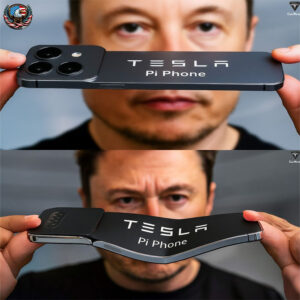
$789 Tesla Pi Phone Finally Confirmed release date! Starlink Free Destroy iPhone 17 Pro Max?
The speculation can finally rest: Tesla has officially confirmed the release date of its highly anticipated Tesla Pi Phone — priced at just $789. After years of rumors, leaks, and endless hype, the device is no longer science fiction. Elon Musk’s bold entry…

“Sit down, Barbie.” — Whoopi Goldberg suddenly lashed out at Erika Kirk, calling her a “T.R.U.M.P. puppet” live on air. But just minutes later, before Erika could even respond, Elon Musk spoke up — not to tear her down, but to defend her.
Elon Musk Defends Erika Kirk After Whoopi Goldberg’s On-Air Attack — Studio Left in Stunned Silence “Sit down, Barbie.” The words landed like a slap. Live on national television, Whoopi Goldberg dismissed commentator Erika Kirk not with a counterargument, but…
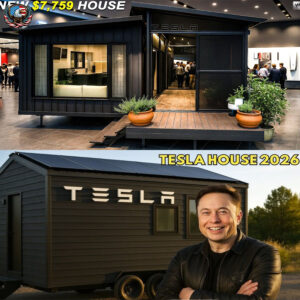
Elon Musk Announces 2026 Tesla Tiny House is Finally HERE: What’s Breaking the Internet?
For years, Elon Musk has teased the idea of a futuristic “tiny home” that could revolutionize the way we think about sustainable living. This week, the wait officially ended. Musk unveiled the 2026 Tesla Tiny House, and the internet can’t stop…
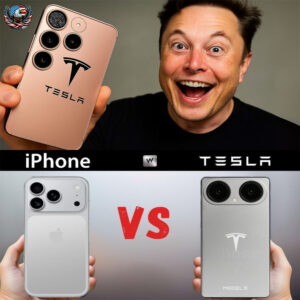
BREAKING: The $217 Tesla Pi Phone has ARRIVED! Elon Musk stuns the smartphone industry with a launch no one saw coming. Packed with groundbreaking features that leave the iPhone 17 in the dust, this release isn’t just an upgrade — it changes everything.
BREAKING: The $217 Tesla Pi Phone Has ARRIVED! Elon Musk has done it again. Just when the smartphone industry thought it had seen it all, Musk blindsided everyone with a launch that no one — not Apple, not Samsung, not…
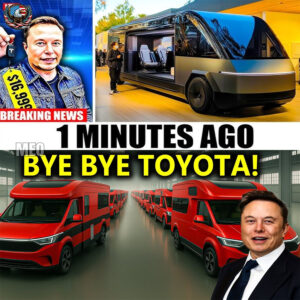
Elon Musk Unveils Tesla’s $17,000 Motorhome That Could Upend the Entire Auto Industry
In a move that’s sending shockwaves through the global automotive world, Elon Musk has just unveiled Tesla’s most unexpected and disruptive innovation yet: a futuristic electric motorhome priced at only $17,000. Yes, you read that right—Tesla is entering the camper van market, and…
End of content
No more pages to load