In 2002, when Elon Musk announced he was going to build rockets and eventually send humans to Mars, most of the world laughed. The billionaire entrepreneur was best known at the time for co-founding PayPal—a far cry from building interplanetary spacecraft. But behind his bold vision was a level of commitment few could match.
Rather than wait for investors, Musk put $100 million of his own money into launching a private space company—SpaceX (Space Exploration Technologies Corp.). Experts called it financial suicide. Rivals doubted it would survive even one rocket launch.
They were wrong.

From Fiery Failures to Historic Success
The early years were brutal. SpaceX’s first three rocket launches all failed, draining money and morale. Musk later admitted he was days away from bankruptcy. But in 2008, everything changed: the Falcon 1 rocket successfully reached orbit, making SpaceX the first privately funded company to do so.
NASA noticed. That same year, the agency awarded SpaceX a $1.6 billion contract to deliver cargo to the International Space Station—a deal that saved the company and launched it into the global spotlight.
Since then, Musk’s rockets have repeatedly broken barriers once thought to belong only to government programs like NASA or Russia’s Roscosmos. SpaceX’s Falcon 9 became the world’s first reusable orbital rocket. Its massive Starship is now being tested for human missions to the Moon and Mars.
The Mars Mission: “We Must Become a Multiplanetary Species”
For Musk, success isn’t just about money or fame—it’s about survival.
“I think there is a strong humanitarian argument for making life multiplanetary,” Musk said. “We don’t want to be one asteroid away from extinction.”
His goal is nothing short of colonizing Mars. SpaceX is developing the Starship system to carry up to 100 people per flight, aiming to launch cargo missions to Mars within the next decade—and human missions soon after.
While critics question the timeline, few doubt Musk’s drive. He’s taken SpaceX from a near-bankrupt idea to a global powerhouse reshaping the space industry.

Ruling the New Space Race
With competitors like Jeff Bezos’s Blue Origin and NASA’s Artemis program, the modern space race is heating up. But Musk has a major head start. SpaceX is already launching astronauts to the International Space Station, developing global internet through Starlink, and preparing for deep space missions.
And through it all, Musk’s vision has never wavered.
From risking his entire fortune to launching reusable rockets, Elon Musk has redefined what’s possible in space—and now, he may be the one to lead humanity’s first step on another planet.
News
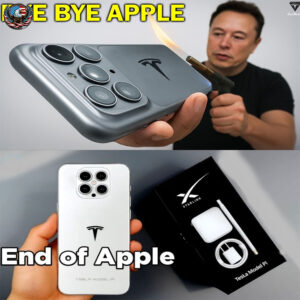
BREAKING! $789 Tesla Pi Phone Finally HERE! Starlink FREE & First Look DESTR0YS iPhone 17 Pro Max!
The wait is over. After years of rumors, leaks, and speculation, Tesla has officially unveiled the long-anticipated Tesla Pi Phone, priced at just $789. More than just a smartphone, the Pi Phone is being touted as a technological revolution, promising to disrupt…
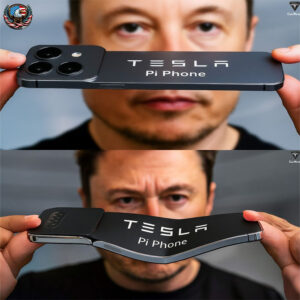
$789 Tesla Pi Phone Finally Confirmed release date! Starlink Free Destroy iPhone 17 Pro Max?
The speculation can finally rest: Tesla has officially confirmed the release date of its highly anticipated Tesla Pi Phone — priced at just $789. After years of rumors, leaks, and endless hype, the device is no longer science fiction. Elon Musk’s bold entry…

“Sit down, Barbie.” — Whoopi Goldberg suddenly lashed out at Erika Kirk, calling her a “T.R.U.M.P. puppet” live on air. But just minutes later, before Erika could even respond, Elon Musk spoke up — not to tear her down, but to defend her.
Elon Musk Defends Erika Kirk After Whoopi Goldberg’s On-Air Attack — Studio Left in Stunned Silence “Sit down, Barbie.” The words landed like a slap. Live on national television, Whoopi Goldberg dismissed commentator Erika Kirk not with a counterargument, but…
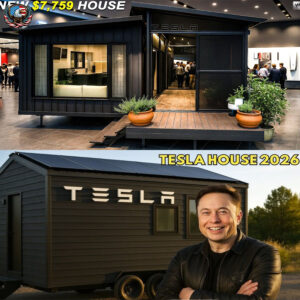
Elon Musk Announces 2026 Tesla Tiny House is Finally HERE: What’s Breaking the Internet?
For years, Elon Musk has teased the idea of a futuristic “tiny home” that could revolutionize the way we think about sustainable living. This week, the wait officially ended. Musk unveiled the 2026 Tesla Tiny House, and the internet can’t stop…
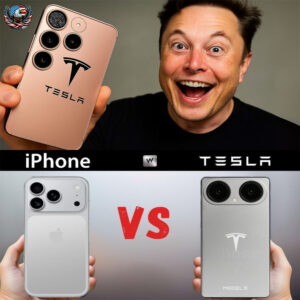
BREAKING: The $217 Tesla Pi Phone has ARRIVED! Elon Musk stuns the smartphone industry with a launch no one saw coming. Packed with groundbreaking features that leave the iPhone 17 in the dust, this release isn’t just an upgrade — it changes everything.
BREAKING: The $217 Tesla Pi Phone Has ARRIVED! Elon Musk has done it again. Just when the smartphone industry thought it had seen it all, Musk blindsided everyone with a launch that no one — not Apple, not Samsung, not…

Elon Musk Unveils Tesla’s $17,000 Motorhome That Could Upend the Entire Auto Industry
In a move that’s sending shockwaves through the global automotive world, Elon Musk has just unveiled Tesla’s most unexpected and disruptive innovation yet: a futuristic electric motorhome priced at only $17,000. Yes, you read that right—Tesla is entering the camper van market, and…
End of content
No more pages to load